


Before the first light of dawn kissed the earth, Jabeli was already awake, his resolve steeled for another day of hardship. At precisely 5:00 a.m., he would slip quietly out of their small home, the weight of the world pressing down on his shoulders, yet his heart was unwavering. The morning air was still cool, but Jabeli’s thoughts burned with determination. For him, each day was a battle, an endless cycle of sacrifice and perseverance driven by the single desire to give his daughter, Promise, a future beyond the struggle he knew all too well.
Jabeli’s dreams were simple, yet profound. In the quiet moments of the early morning, he envisioned a world where Promise could break free from the chains of poverty that had bound him, his wife, Mariam, and countless others. His deepest wish was for her to become a nurse, someone who could care for him and Mariam in their old age and escape the grim fate that awaited so many in their village. Above all, he dreamed of a future where Promise could have a destiny untouched by the grinding hardship that defined his own life. But for that to happen, she had to continue her education. Without it, Jabeli’s sacrifices, his long days and sleepless nights would be in vain, and his dreams would dissolve like the dust on Nakawuka’s crumbling roads.
Jabeli and Mariam had made a quiet but resolute decision years ago—not to have another child. The cost of raising a family in such harsh circumstances was too great, and they knew they could only afford the future they dreamed of for Promise. She was their only hope, their single thread to a life that might one day be better. But that hope rested precariously on her education, fragile and uncertain. Each day, Jabeli felt the weight of that responsibility pressing down on him. If she failed to finish school, if the path forward remained blocked by financial barriers, all his struggles would have been for nothing.
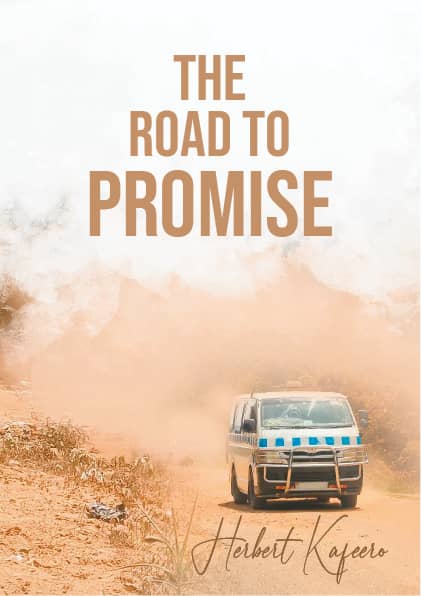
The road he traveled each day was as unforgiving as the world he fought to change. His hands, calloused and stained with the grease of a taxi engine, gripped the doorframe of the battered vehicle, feeling every jolt as it sputtered to a halt along the worn-out Nakawuka road. Beside him, the driver, Mukiibi, cursed the machine, which seemed to be on the brink of collapse.
“This thing is going to be the death of me, Jabeli,” Mukiibi muttered, frustration evident in every word.
The taxi, a rusted relic that had seen too many moons, groaned in protest, its engine coughing like an old man gasping for air. Nakawuka’s potholes laughed at the frail machine, their jagged edges, a constant reminder of the decay that surrounded them.
“It’s the shocks again,” Mukiibi grumbled, his brow slick with sweat.
Jabeli exhaled slowly, the weight of the situation pressing on his chest. “The road has no mercy, Mukiibi. How are we supposed to survive if the taxi can’t even get us through the day without breaking down?”
“I know, I know,” Mukiibi replied, slapping the steering wheel in resignation. “But we’ve got no choice. We can’t afford a proper repair. Let’s just hope the mechanic’s not too far. You sleep here tonight, Jabeli. We can’t let anyone strip the car while we’re gone.”
The mechanic, Kilimutu, was a reliable man, but reliability couldn’t buy brake pads. So, Jabeli found himself spending the night in the musty confines of the taxi, his heart heavy with thoughts of Mariam and Promise.
“Jabeli, please don’t stay out there too long. Promise keeps asking where her father sleeps now,” Mariam’s voice trembled on the other end of the line.
“I will be fine. Just sleep easy. I will call you when it’s sorted,” he promised, though the words felt hollow.
The night passed slowly, each minute weighed down by the ache of longing and frustration. Jabeli couldn’t help but think of Promise, whose bright future had once seemed so certain when she passed her P7 exams with distinction. But now, without money for secondary school, her future felt like a distant dream, fading with each passing day. Jabeli prayed that, just maybe, the government would remember them. Perhaps, just perhaps, they might finally fix the road.
By morning, Kilimutu arrived, his wiry hands deftly working to breathe life back into the old engine. The taxi limped back onto Nakawuka’s treacherous roads, each journey now a fight for survival.
Later, as they picked up mourners headed to a burial, the conversation in the back of the taxi turned to politics, as it often did among the weary souls traveling the broken road.
‘‘Have you heard about the new politician running for MP?’’ one woman asked, shaking her head in disbelief. “Another one! They keep coming, promising us everything, but it’s all just talk. They’re after jobs for themselves, not for us.”
“Exactly,” a young man added, his voice full of frustration. “They say they’ll fix the roads, but nothing changes. Nakawuka’s road is a perfect example. Every election, they promise us a better future, but we’re still stuck in this mess.”
The conversation continued, each passenger sharing their disillusionment. Jabeli listened quietly, his chest tightening with every word. It was hard to argue with them. The promises, like the potholes, never seemed to be filled. They were empty words that never delivered, leaving people like Jabeli to suffer through the harsh realities of a system that had long since forgotten them.
When he finally returned home that evening, the faint weight of extra coin in his pocket did little to ease the burden in his heart. Promise sat at the door, her eyes wide with eager anticipation.
“Where did you sleep, Papa?” she asked, her innocent question piercing him to the core.
Jabeli sat beside her, his weariness settling deep into his bones. “The taxi broke down again, Promise. I had to sleep in it to make sure no one stole anything.”
Promise’s eyes filled with confusion. “But why doesn’t the government help us, Papa? Why hasn’t Nakawuka road been fixed yet?”
The question hung in the air, and Jabeli’s heart sank. His daughter deserved so much more—a future where roads weren’t broken promises, where her dreams could flourish without the crushing weight of poverty.
Mariam entered the room just then, her face drawn, burdened by the weight of her own struggles. ‘‘I went to the Health Center today, Jabeli,’’ she said, her voice thick with frustration. ‘‘There’s no medicine. The shelves are bare. I’ve been going there for weeks, but it’s the same story, nothing, no help.’’
Jabeli sighed, the weight of it all settling like stones in his chest. ‘‘I heard on the radio that the US government froze the funding, Mariam. That money—it was our lifeline, the backbone of the whole health sector. Now, we’re left to wait. Left to hope that somehow, someone will step in and fix this mess.’’
Promise, still trying to make sense of it all, looked up at her parents, her brow furrowed in confusion. ‘‘But why? We pay taxes, don’t we? Doesn’t that mean they should make things better for us?’’
Mariam’s bitter laugh echoed in the room. “You tell me, Promise. We’re the ones who pay, but we wait—wait for roads, for medicines, for schools. Everything just takes forever. And we’re still here, waiting.”
Jabeli gently placed his hand on Promise’s head, his rough fingers brushing through the soft strands of her hair. ‘‘Maybe things will change in 2026, Promise. Maybe then we’ll vote for people who won’t forget us, people who won’t just promise the world and deliver dust. But for now, we keep walking these hard roads. Just like we always have.’’
Promise nodded, a quiet understanding in her eyes, an understanding far too mature for her age. There was a deep silence in the room then, one filled with unspoken vows, the kind only shared by those who have endured too much, yet still hold onto hope. And though the road ahead seemed endless, with no end in sight, at least they had each other. And for today, that was enough.